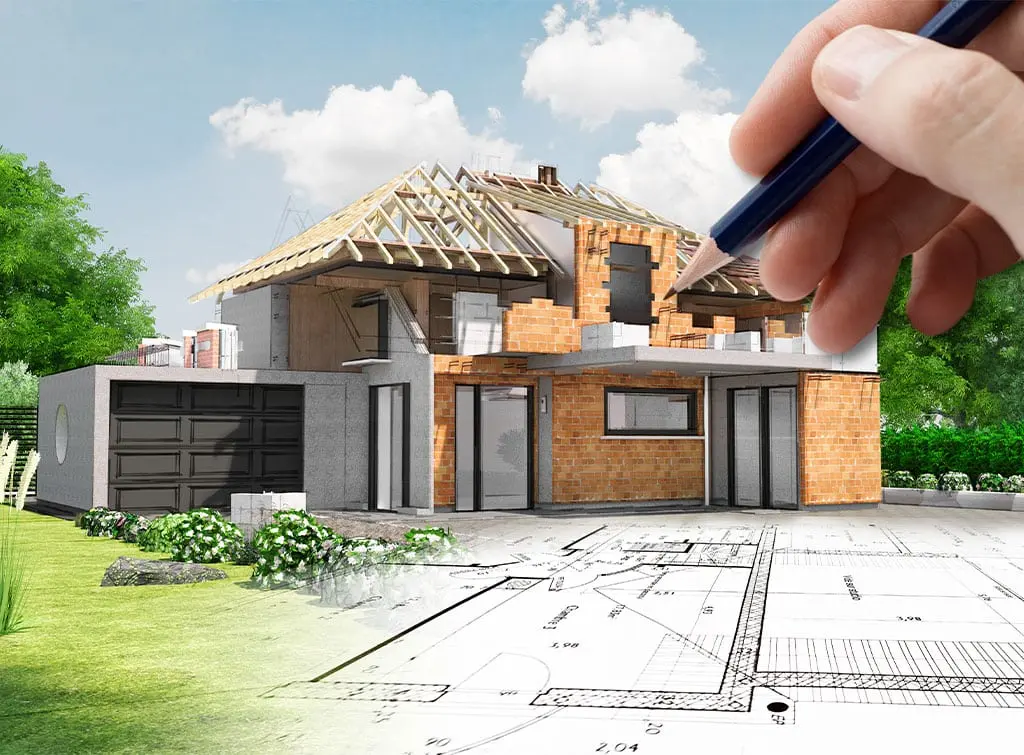


When planning a home extension in Surrey, one of the biggest decisions you'll face is whether to build single or double-storey. Both options have distinct advantages, costs, and planning considerations—and the right choice depends on your specific needs, budget, and property.
This comprehensive guide will help you understand the differences and make the best decision for your home and family.
The Fundamental Difference
Single-Storey Extension
Extends your ground floor only, typically adding a kitchen, dining area, or living space with connection to the garden.
Double-Storey Extension
Extends both ground and first floors, maximizing space by building upward and adding rooms on two levels.
Cost Comparison: What's the Real Difference?
Single-Storey Extension Costs (4m x 4m)
- Total cost: £40,000 - £50,000
- Cost per m²: £2,500 - £3,000
- Space gained: 16m² (ground floor only)
What's included:
- Foundations
- Ground floor structure
- Roof
- Windows/doors
- Services (electrics, plumbing)
- Plastering and basic finishes
Double-Storey Extension Costs (4m x 4m)
- Total cost: £60,000 - £80,000
- Cost per m²: £1,875 - £2,500
- Space gained: 32m² (16m² x 2 floors)
What's included:
- Deeper foundations (supporting two storeys)
- Ground floor structure
- First floor structure and joists
- Two roofs (or one larger)
- Windows/doors (twice as many)
- Stairs
- Services on both floors
- Plastering and finishes (double the area)
The Cost Analysis
Key insight: A double-storey extension costs 50-60% more than single-storey, but provides 100% more space.
Cost per m² comparison:
- Single-storey: £2,750/m² average
- Double-storey: £2,187/m² average
- Savings: £563/m² with double-storey
Why is double-storey more cost-effective per m²?
- Foundation work similar (just slightly deeper)
- Only one set of groundworks
- Shared structural elements
- Single scaffolding cost
- Same site setup
Example calculation:If you need 32m² of space:
- Option A: Single-storey 32m² = £88,000
- Option B: Double-storey 16m² (x2) = £70,000
- Savings: £18,000 with double-storey
Planning Permission & Regulations
Single-Storey Extensions
Permitted Development - NO planning needed if:
- Extends max 8m from rear (detached/semi-detached)
- Extends max 6m from rear (terraced)
- Maximum 4m high
- Eaves maximum 3m high
- At least 2m from boundary
- Doesn't cover more than 50% of garden
- Materials similar to existing house
When planning IS needed:
- Extends beyond permitted limits
- In conservation area
- Listed building
- Article 4 direction in place
Building Regulations: Always required
Timeline if permitted development: Start as soon as Building Regs approved (2-4 weeks)
Double-Storey Extensions
Permitted Development - NO planning needed if:
- Extends max 3m from rear wall (much more restrictive)
- No higher than existing house
- Within 7m of boundary, must be single-storey
- Materials match existing house
- Roof pitch matches existing
When planning IS needed:
- Most double-storey rear extensions need planning
- Extends more than 3m
- Changes appearance significantly
- Side extensions almost always need planning
Building Regulations: Always required (more complex than single-storey)
Timeline with planning: 8-12 weeks for planning decision, then Building Regs
Reality: Most Surrey double-storey extensions require planning permission due to the 3m restriction.
Space & Functionality
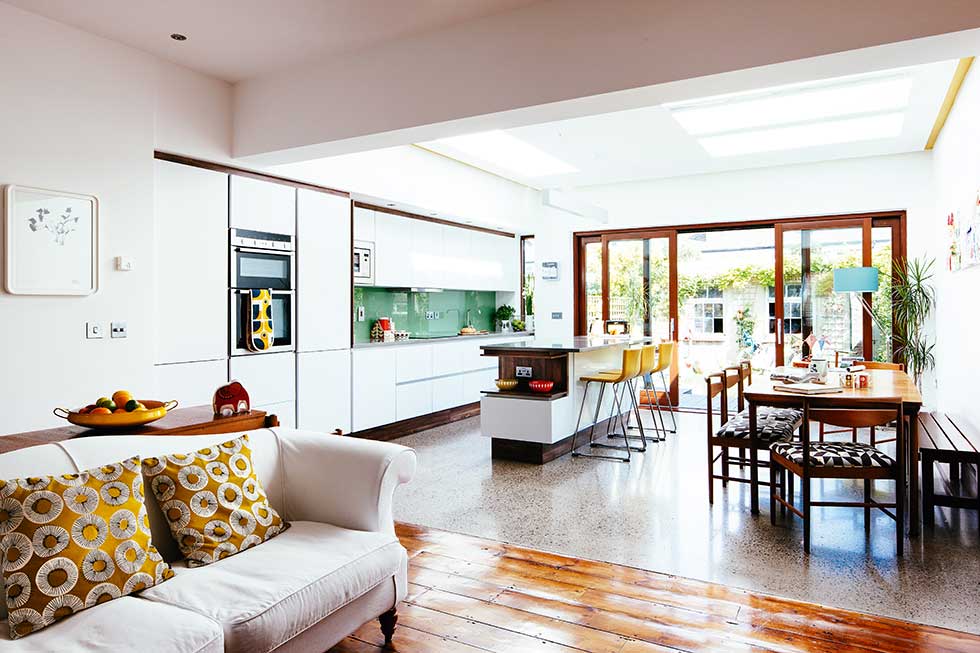
Single-Storey Extensions: Best For
1. Open-Plan Living
- Kitchen-diner
- Kitchen-living-dining
- Extended living room
- Connecting to garden
Benefits:
- Creates contemporary family hub
- Maximizes natural light (roof lights, bi-folds)
- Seamless indoor-outdoor flow
- Perfect for entertaining
- Keeps all living on one level
2. Specific Ground Floor Needs
- Utility room
- Downstairs WC or shower room
- Home office with garden access
- Playroom
- Extended kitchen
3. Elderly or Accessibility Needs
- Everything on one level
- No stairs required
- Easier access
- Future-proofing
4. Properties with Good Garden Space
- Large gardens where footprint isn't an issue
- Garden more valuable than upper space
- Want to preserve garden proportion
Double-Storey Extensions: Best For
1. Maximum Space Gain
- Growing families
- Need bedrooms AND living space
- Limited garden (can't extend far outward)
- Want to maximize property value
Typical configurations:
- Ground floor: Extended kitchen-diner
- First floor: Master bedroom with ensuite OR two children's bedrooms
2. Smaller Gardens
- Extends minimally into garden
- Builds upward not outward
- Preserves outdoor space
- Ideal for terraced houses
3. Adding Bedrooms
- Creating 4th or 5th bedroom
- Master suite with ensuite and dressing room
- Two children's bedrooms
- Guest bedroom plus study
4. Symmetry & Appearance
- Matches existing house proportions
- Looks more intentional
- Better street appeal
- Particularly important on detached/semi-detached
5. Long-Term Investment
- Planning to stay 10+ years
- Maximum property value increase
- Future flexibility
- Worth the extra investment
Structural Considerations
Single-Storey Extensions
Foundation requirements:
- Standard depth (typically 1m)
- Width based on ground conditions
- Simpler engineering
Structural elements:
- Steel beam over opening (if required)
- Standard wall construction
- Roof structure (pitched or flat)
Complexity: Moderate
Double-Storey Extensions
Foundation requirements:
- Deeper foundations (1.5-2m typically)
- Must support two storeys
- More substantial engineering
- Ground investigation recommended
Structural elements:
- Multiple steel beams (ground and first floor)
- First floor joists and supports
- Stronger wall construction
- More complex roof structure
- Staircase considerations
Complexity: High - requires structural engineer
Cost implications:
- Foundation depth adds £2,000-£4,000
- Additional structural steelwork: £3,000-£6,000
- First floor construction: £8,000-£12,000
Build Timeline
Single-Storey Extension
Total construction time: 12-16 weeks
- Weeks 1-2: Foundations
- Weeks 3-6: Walls and structure
- Weeks 7-9: Roof
- Weeks 10-12: First fix
- Weeks 13-16: Second fix and finishing
Advantages:
- Faster completion
- Less disruption overall
- Simpler project management
- Less weather dependent (shorter exposure)
Double-Storey Extension
Total construction time: 16-24 weeks
- Weeks 1-3: Foundations (deeper)
- Weeks 4-9: Ground floor walls and first floor structure
- Weeks 10-12: First floor walls
- Weeks 13-15: Roof
- Weeks 16-19: First fix (both floors)
- Weeks 20-24: Second fix and finishing
Challenges:
- Longer disruption period
- More complex scheduling
- More weather exposure
- Coordination of more trades
Disruption to Daily Life
Single-Storey Extension
Living situation:
- If kitchen extension: Temporary kitchen needed (weeks 8-14)
- Dust mainly ground floor
- Can usually live upstairs normally
- Outdoor access restricted
- Noise during working hours
Manageable if:
- You have good temporary kitchen space
- You're flexible about routines
- Working from home isn't critical
Double-Storey Extension
Living situation:
- Ground floor disruption (as single-storey)
- PLUS first floor disruption
- Bedrooms may be affected
- Upstairs bathroom access may be limited
- Structural work both floors
- Noise on both levels
Consider staying elsewhere if:
- Working from home full-time
- Young children napping
- Health conditions affected by dust
- Very disruption-sensitive
Reality check: Many families stay, but it's harder with double-storey.
Property Value & ROI
Single-Storey Extension Returns
- Value increase: 10-15% on average
- ROI: 90-120%
- Best ROI: Kitchen extensions with quality finishes
Example:
- £500,000 Surrey home
- £50,000 single-storey kitchen extension
- New value: £550,000-£575,000
- Net gain: £0-£25,000
When value is maximized:
- Creates open-plan living
- High-quality finishes
- Bi-fold or sliding doors
- Good natural light
- Professional design
Double-Storey Extension Returns
- Value increase: 15-25% on average
- ROI: 100-150%
- Best ROI: Adding bedroom(s) in areas with high demand
Example:
- £500,000 Surrey 3-bed home
- £70,000 double-storey extension
- Creates 4-bed with extended kitchen
- New value: £575,000-£625,000
- Net gain: £5,000-£55,000
When value is maximized:
- Adds bedroom count (3-bed to 4-bed)
- Master ensuite created
- Open-plan kitchen-diner
- High-demand area for family homes
- Professional design and finishes
Bedroom count impact:In Surrey's family-focused market, adding a bedroom through a double-storey extension often has higher ROI than single-storey living space alone.
Your Property Type
Terraced Houses
Single-Storey:
- ✓ Often easier planning (if within limits)
- ✓ Maintains garden space
- ✓ Less impact on neighbors
- ✓ Side-return popular option
Double-Storey:
- ⚠ Usually needs planning permission
- ⚠ Party wall agreement essential
- ⚠ Neighbor considerations
- ✓ Maximizes limited garden space
Best choice: Depends on garden size and needs, but single-storey + side-return often works well.
Semi-Detached Houses
Single-Storey:
- ✓ Good permitted development potential
- ✓ Less boundary concerns
- ✓ Flexible sizing
Double-Storey:
- ✓ Often matches existing proportions
- ✓ Symmetrical appearance
- ✓ Good value increase
- ⚠ Party wall considerations
Best choice: Double-storey works very well, especially for adding bedrooms while extending kitchen.
Detached Houses
Single-Storey:
- ✓ Maximum permitted development room
- ✓ Can extend further
- ✓ More design freedom
- ✓ Less planning concern
Double-Storey:
- ✓ Best aesthetic match
- ✓ Maintains proportions
- ✓ Maximum value increase
- ✓ No party wall issues
- ✓ Full design freedom
Best choice: Both work excellently; choose based on space needs and budget.
Decision Framework
Choose Single-Storey If:
✓ You primarily need ground-floor living space✓ You have adequate garden space✓ Budget is £40,000-£55,000✓ You want faster completion (3-4 months)✓ You want to avoid planning permission✓ You value garden proportion✓ You don't need additional bedrooms✓ You want less disruption✓ Open-plan living is the goal
Choose Double-Storey If:
✓ You need bedrooms AND living space✓ Garden space is limited✓ Budget allows £60,000-£90,000✓ You're planning to stay long-term (7+ years)✓ You want maximum value increase✓ You need to add bedroom count✓ You want better space efficiency (cost per m²)✓ Appearance/symmetry matters✓ You can tolerate 5-6 months construction
Consider Your Future Plans
Staying 3-5 years: Single-storey may be sufficient and provides good ROI
Staying 7-10+ years: Double-storey investment pays off through usage and resale value
Growing family: Double-storey future-proofs your space needs
Downsizing later: Both add value, but double-storey typically adds more
Hybrid Options
"Future-Proofed" Single-Storey
Build foundations strong enough to support second storey later
- Extra cost now: £3,000-£5,000
- Benefit: Can add second storey in future without disturbing existing extension
- Best for: Budget-constrained now but may want more space in 5-10 years
Single-Storey + Loft Conversion
Alternative to double-storey extension
- Combined cost: £70,000-£100,000
- Advantages: Spreads disruption, preserves garden
- Disadvantages: Two separate projects, potentially higher total cost
Making Your Decision: Questions to Ask
- How long will we live here?
- <5 years → Single-storey likely sufficient
- 7+ years → Double-storey worth considering
- What space do we need most?
- Living/kitchen → Single-storey
- Bedrooms + living → Double-storey
- What's our realistic budget?
- £40k-£55k → Single-storey
- £60k-£90k → Double-storey possible
- How important is our garden?
- Very important → Double-storey preserves more
- Less important → Single-storey can extend further
- Can we handle 6 months disruption?
- No → Single-storey faster
- Yes → Double-storey manageable
- Do we need planning permission anyway?
- If you need planning for single-storey, seriously consider double-storey for better value
Why Choose Morco Construction?
At Morco Construction, we help Surrey homeowners make the right choice:
✓ Honest assessment of what works for YOUR property✓ Cost comparison between both options✓ Design expertise to maximize either approach✓ Planning support if permission required✓ Quality delivery of single or double-storey projects✓ Fixed-price quotes with no hidden costs
We've delivered hundreds of both types across Surrey and can guide you to the best decision.
Get Expert Advice
Still unsure whether single or double-storey is right for you?
Contact Morco Construction for:
- Free site assessment
- Comparison of both options for your property
- Detailed quotes for each approach
- Professional recommendations
- Examples of both types we've completed
Let us help you make the best choice for your home, family, and budget.
Neither option is inherently "better"—the right choice depends entirely on your specific needs, property, and circumstances. Make the decision that serves your family best, not what's trendy or what neighbors did.