

A kitchen extension is one of the most transformative home improvements you can make. Done right, it creates a stunning family hub, adds significant value, and changes how you live. Done wrong, it becomes an expensive source of regret.
After completing hundreds of kitchen extensions across Surrey, we've seen the same mistakes repeated again and again. The good news? They're all avoidable.
In this guide, we'll share the 5 most common kitchen extension mistakes—and exactly how to avoid them.
Mistake #1: Poor Layout Planning
The Problem
"We'll figure out the layout once the extension is built"
This is the #1 mistake that leads to disappointing results. Homeowners focus on getting extra space without thoroughly planning how they'll actually use it.
Common layout failures:
- Kitchen triangle doesn't work (sink, cooker, fridge too spread out)
- No prep space near hob
- Fridge too far from main workspace
- Dining table blocks kitchen access
- Not enough worktop space
- Islands that are too big or too small
- Dead space that's hard to use
- Traffic flow problems (people constantly in the cook's way)
Real example:One Surrey couple extended 5m into their garden, creating a beautiful 35m² space. But they positioned the island so it blocked the route from kitchen to dining area, making serving meals awkward. Moving it would have cost £8,000.
The Solution
Plan the layout BEFORE finalizing extension size and shape
- Work with a kitchen designer early (during extension design phase, not after)
- Many will consult for free or small fee
- They'll optimize the space
- Integration with extension design is critical
- Map your workflow:
- Food storage → Prep → Cook → Serve → Clean
- Ensure logical flow
- Minimize steps between key areas
- Respect the kitchen triangle:
- Sink, cooker, fridge should form a triangle
- Each leg: 1.2m - 2.7m ideally
- No traffic cutting through the triangle
- Plan for these zones:
- Prep zone: Largest worktop run (min 900mm near sink/cooker)
- Cooking zone: Hob with 300mm+ either side
- Cleaning zone: Sink with dishwasher adjacent
- Storage zone: Pantry, tall units
- Social zone: Island or breakfast bar
- Use cardboard mockups:
- Cut cardboard to island/table size
- Place in current space
- Test traffic flow
- Adjust before building
- Consider these measurements:
- Minimum walkway: 900mm (1,200mm for busy routes)
- Island clearance: 1,000mm minimum both sides
- Dining table clearance: 900mm for chairs
- Work triangle perimeter: 4m-7.9m total
Cost to get this right: £500-£2,000 for professional kitchen design
Cost if you get it wrong: £5,000-£15,000 to reconfigure later, or living with poor layout forever
Mistake #2: Inadequate Budget & Underestimating Finishing Costs
The Problem
"We've budgeted £50,000 for our extension, so we'll have £50,000 to spend on the kitchen too"
Many homeowners budget for the extension structure but fail to properly budget for EVERYTHING needed to make it usable.
What people forget:
Beyond the extension structure:
- Kitchen units: £5,000-£25,000
- Appliances: £2,000-£8,000
- Worktops: £2,000-£6,000
- Flooring: £2,000-£5,000
- Decorating: £1,500-£3,000
- Lighting: £1,000-£3,000
- Bi-fold doors: £3,000-£8,000 (often not in base quote)
- Underfloor heating: £2,000-£4,000 (popular addition)
- Landscaping: £3,000-£8,000 (garden gets churned up)
- Furniture: £2,000-£5,000 (new table, chairs)
Reality check:£50,000 extension + £25,000 finishing = £75,000 total project cost
The Solution
Create a comprehensive budget covering EVERYTHING
Sample realistic budget breakdown:
£60,000 total budget example:
Structure (£35,000 - 58%):
- Foundations, walls, roof
- Windows and external doors
- Basic electrics and plumbing
- Plastering
- Building Regulations
Kitchen (£15,000 - 25%):
- Units and fitting: £8,000
- Worktops: £3,000
- Appliances: £4,000
Finishes (£6,000 - 10%):
- Flooring: £2,500
- Decorating: £2,000
- Lighting: £1,500
Contingency (£4,000 - 7%):
- Unexpected issues
- Change of mind
- Price increases
Budget tips:
- Add 15% contingency - you'll probably use it
- Prioritize spending:
- High: Structure, insulation, windows (expensive to change later)
- Medium: Kitchen units, worktops
- Low: Decorating, furniture (can be upgraded later)
- Get itemized quotes:
- Know exactly what's included
- Identify what you'll need to pay separately
- No surprises
- Phase if necessary:
- Extension structure first
- Basic kitchen to make it usable
- Premium finishes 6-12 months later when budget allows
- Save on these without compromising quality:
- IKEA kitchens with professional fitting (£8,000 vs £20,000)
- Laminate worktops instead of quartz (£1,500 vs £4,000)
- Porcelain tiles instead of natural stone
- DIY decorating
- Standard rather than premium appliances
- Don't save on:
- Structural work
- Insulation (energy bills forever)
- Windows and doors quality
- Waterproofing
- Electrics and plumbing
Most importantly: Be honest about total budget BEFORE starting design.
Mistake #3: Insufficient Natural Light & Ventilation
The Problem
"We'll just extend the existing roof over the new space"
Dark, stuffy kitchen extensions are surprisingly common. Homeowners focus on square footage but forget that quality of space matters as much as quantity.
Common mistakes:
- Solid roof with no roof lights
- Small windows only
- Deep extension with no light at rear
- Not considering light direction
- Inadequate ventilation (cooking smells linger)
- Dark in winter even with lights on
- Relying solely on doors for light
The difference:
- Dark extension: Feels cramped, needs lights even during day, not welcoming
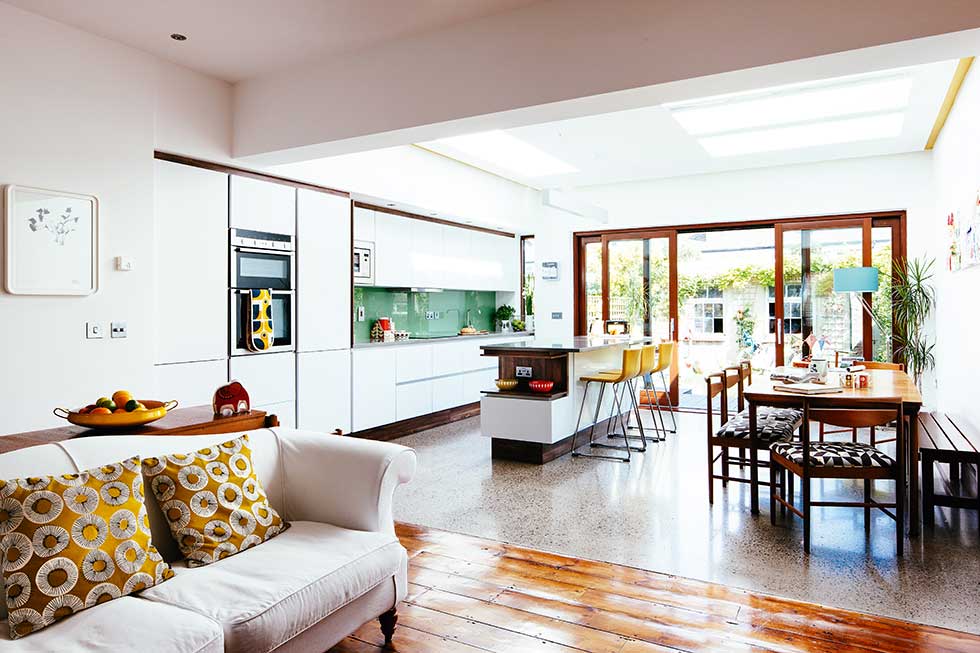
- Light-filled extension: Spacious, bright, connects with outdoors, genuinely transformative
The Solution
Maximize natural light and ventilation from the design stage
Roof lights (Velux/skylights):
- Cost: £800-£1,500 each installed
- Impact: Massive - transforms dark space
- Recommendation:
- Minimum 1 roof light per 4m²
- Larger often better (one 2m x 1m vs two 1m x 1m)
- Position over key areas (island, dining table)
- Opening versions for ventilation
Lantern roofs:
- Cost: £3,000-£8,000
- Impact: Stunning centerpiece, floods space with light
- Best for: Extensions over 20m²
- Consideration: Need decent ceiling height (2.4m minimum)
Bi-fold or sliding doors:
- Cost: £3,000-£8,000 for quality
- Impact: Brings garden in, maximizes light
- Sizes:
- 3m opening: £3,000-£4,500
- 4m opening: £4,500-£6,000
- 5m opening: £6,000-£8,000
Large windows:
- Fixed panes with opening sections
- Floor-to-ceiling where possible
- Corner windows (two walls of glass)
Ventilation solutions:
- Opening roof lights (creates stack effect - hot air rises and escapes)
- Extractor fan (recirculating or ducted)
- Opening windows on multiple walls (cross-ventilation)
- Mechanical ventilation (for large extensions)
Real example:We added 4 roof lights (£5,000) to a £45,000 extension. Client said it was the best £5,000 spent—transformed it from "nice" to "spectacular."
Light direction planning:
- South-facing: Best natural light, may need shading in summer
- North-facing: Consistent but cooler light, needs more windows
- East-facing: Morning light, darker afternoons
- West-facing: Afternoon/evening light
Budget allocation:If budget is tight, sacrifice 1m² of floor space to afford roof lights. You'll value the quality more than the quantity.
Mistake #4: Poor Heating & Insulation Decisions
The Problem
"We'll just extend the existing radiators"
Many homeowners treat heating as an afterthought, leading to uncomfortable spaces and high energy bills.
Common heating mistakes:
- Undersized radiators (extension always cold)
- No heating plan (relying on existing system)
- Poor insulation (heat loss makes it expensive to run)
- Choosing cheapest insulation (penny wise, pound foolish)
- Not future-proofing for rising energy costs
- Single glazing or cheap double glazing
- Not sealing properly (drafts around doors)
The impact:
- Cold extension in winter (unusable in evenings)
- Condensation and damp issues
- High heating bills (£200-£500 extra per year)
- Main house colder (heat drawn to cold extension)
- Uncomfortable space despite beautiful design
The Solution
Invest properly in insulation and heating from the start
Insulation (invest heavily here):
Walls:
- Building Regs minimum: 0.28 U-value
- Better standard: 0.18 U-value
- Best: 0.15 U-value
- Extra cost for better: £500-£1,500
- Payback: 5-8 years through energy savings
Roof:
- Building Regs minimum: 0.16 U-value
- Better standard: 0.13 U-value
- Best: 0.11 U-value
- Extra cost: £800-£2,000
- Benefit: Warmer in winter, cooler in summer
Floor:
- Building Regs minimum: 0.22 U-value
- Better: 0.15 U-value with insulated slab
- Best: 0.13 U-value
- Underfloor heating works better with good floor insulation
Windows & Doors:
- Minimum: Standard double glazing (1.6 U-value)
- Better: A-rated double glazing (1.4 U-value)
- Best: Triple glazing (0.8 U-value)
- Cost difference: £500-£2,000 for typical extension
- Worth it? Yes, especially for bi-folds and large windows
Heating options:
1. Underfloor Heating (UFH)
- Cost: £2,000-£4,000 installed
- Pros: Even heat, no radiators (more wall space), lovely warm floors, efficient with modern boilers
- Cons: Slower to heat up, harder to modify later
- Best for: Open-plan spaces, modern homes, new build standard
- Running cost: Often 25% cheaper than radiators
2. Radiators
- Cost: £800-£2,000
- Pros: Fast heat-up, familiar, easy to control
- Cons: Takes wall space, can be visible
- Best for: Budget-conscious, existing systems
- Sizing: Calculate properly - undersized = always cold
3. Hybrid (UFH + radiators)
- UFH in main area, radiators in utility/boot room
- Best of both worlds
- Slightly higher cost
Heat pump considerations:
- If you have or plan a heat pump, insulation is CRITICAL
- Heat pumps work best with UFH
- Budget extra £1,000-£2,000 for superior insulation
Our recommendation:
- Spend extra £2,000-£4,000 on insulation and UFH
- Reduce energy bills by £200-£400/year
- More comfortable year-round
- Future-proof for heat pumps
- Better for environment
Payback: 8-12 years, but you benefit every single day
Mistake #5: Ignoring the Bigger Picture (House Flow & Existing Space)
The Problem
"We'll knock through the wall and extend the kitchen"
Many homeowners focus exclusively on the extension without considering how it affects the rest of the house.
What gets overlooked:
- Original rooms left awkward and unused
- Loss of separate dining room (may regret later)
- Hallway becomes corridor (no purpose)
- Lost storage when walls removed
- Existing living room now too small comparatively
- No quiet space (all open-plan)
- Kids' TV room gone
- Nowhere for messy/noisy activities
- Boot room/utility needs ignored
- Garden access from wrong place
Real example:Family created stunning 40m² open-plan kitchen-diner by removing kitchen wall. Former dining room sat empty and unused. They'd have been better creating two connected spaces or repurposing the dining room as snug/playroom.
The Solution
Plan the whole ground floor, not just the extension
Consider these questions:
1. What happens to the original kitchen space?
- Convert to utility room?
- Boot room and storage?
- Incorporate into living room?
- Playroom?
- Home office?
2. Do you want/need separate spaces?
- Not everything has to be open-plan
- Separate dining room (formal dinners, homework, quieter meals)
- Snug/TV room (while cooking happens)
- Playroom (toys out of sight)
- Study/office
3. Where will messy activities happen?
- Muddy boots and coats (boot room)
- Laundry (utility)
- Recycling and bins
- Pet feeding area
- Kids' arts and crafts
4. Storage implications:
- Removing wall = losing storage
- Where will everything go?
- Plan built-in storage in extension
- Use original kitchen space for storage
5. Traffic flow through house:
- Front door to kitchen route
- Garden access (muddy feet route)
- Living room to kitchen
- Upstairs to kitchen
- Consider separate routes for adults/kids
Better whole-house approaches:
Option A: Open-Plan Extension + Repurposed Rooms
- Extend for kitchen-diner
- Original kitchen → Utility/boot room
- Keep living room separate
- Result: Modern open-plan + dedicated spaces
Option B: Extended Kitchen + Connected Dining
- Extend kitchen
- Open up to original dining room (but keep definition)
- Use pocket doors or wide opening (not full removal)
- Result: Flow but separate zones
Option C: Wraparound Extension
- Side return + rear for maximum ground floor space
- Original kitchen becomes utility
- New extension = kitchen-living-dining
- Result: Huge family space + practical utility
Involve an architect for whole-house view:
- They see possibilities you might miss
- Optimize entire ground floor
- Balance open and closed spaces
- Cost: £1,500-£3,000
- Value: Avoiding £10,000+ mistakes
Questions to ask before finalizing:
- Where will guests enter when entertaining?
- Where do kids do homework?
- Where's the quiet adult space?
- Where do muddy/wet things go?
- Where's laundry done and dried?
- Can someone watch TV while others cook?
- Is there a guest WC easily accessible?
Bonus Mistake: Choosing the Wrong Builder
This deserves mention because it affects everything above.
Signs of wrong builder:
- Quotes significantly below others (by 20%+)
- Not interested in your vision/needs
- Pushes to start immediately
- Vague contract terms
- No insurance details
- Can't provide local references
- No examples of similar work
- Poor communication from the start
Choosing the right builder:
- Surrey-based with local knowledge
- Portfolio of kitchen extensions
- Detailed, itemized quote
- Proper contract
- Full insurance
- Building Regulations experience
- Good communication
- References you can visit
- Realistic timelines
How Morco Construction Helps You Avoid These Mistakes
At Morco Construction, we guide Surrey homeowners through all these considerations:
✓ Early planning discussions covering layout and whole-house impact✓ Honest budget conversations about total project costs✓ Light and space optimization recommendations✓ Insulation and heating expertise for comfort and efficiency✓ Connections to kitchen designers (we work collaboratively)✓ Whole-house thinking not just extension focus✓ Experience with 500+ Surrey kitchen extensions✓ Transparent pricing with no hidden costs
We help you get it right first time.
Your Action Plan
Before starting your kitchen extension:
- ☐ Work with kitchen designer on layout (before finalizing extension design)
- ☐ Budget for EVERYTHING (structure + finishes + contingency)
- ☐ Plan for maximum natural light (roof lights, bi-folds)
- ☐ Invest in excellent insulation and heating
- ☐ Consider whole-house impact and flow
- ☐ Choose builder with kitchen extension experience
- ☐ Get multiple quotes (3-5 builders)
- ☐ Check references and visit completed projects
- ☐ Read contracts carefully
- ☐ Don't rush - planning prevents mistakes
Get It Right First Time
Kitchen extensions are significant investments. Avoiding these 5 mistakes means you'll love your new space for decades, rather than living with expensive regrets.
Contact Morco Construction for:
- Free consultation on your kitchen extension plans
- Expert advice on avoiding common mistakes
- Detailed quote with full cost transparency
- Professional project delivery
- Surrey kitchen extension specialists
Let's create a kitchen extension you'll love—not regret.
The difference between a good kitchen extension and a great one often comes down to avoiding these common mistakes. Plan thoroughly, budget realistically, and work with experienced professionals.